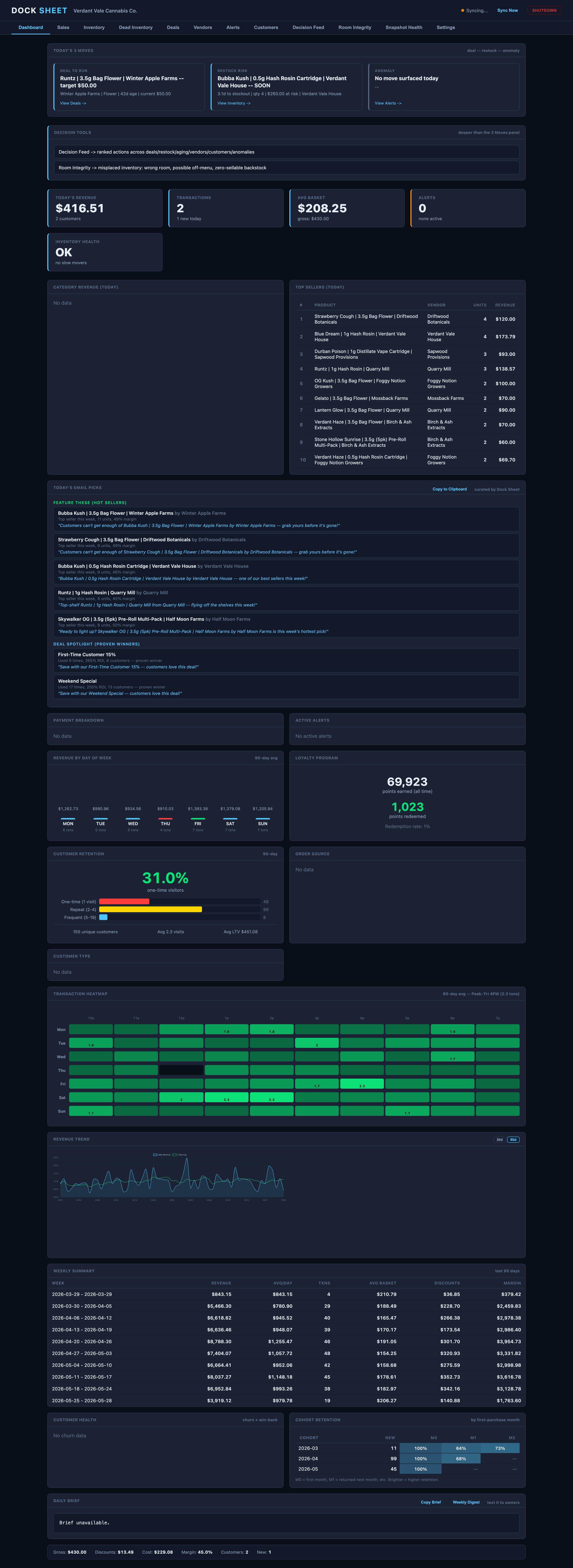
Second cup of coffee, before the doors open. It pulls your sales and inventory straight from your POS and opens to yesterday's numbers and today's so far. It shows what moved, what's been sitting on the shelf too long, and which discount moves it. Open it with the cup. Know the floor before you unlock the door.
No analyst required. Gross, tickets, average sale, and what's gone stale -- read it in a glance, then get back to running the shop. Quiet. Without fuss.
All numbers, names, and vendors above are from a demo dataset. Your real dashboard reflects your real floor.
Docksheet is the most involved app in the whole suite, and it earns it. Under the morning glance are three rooms you actually live in -- inventory, deals, and the dashboard -- plus a long tail of reports for the days you want to dig.
Inventory. A close, easy eye on the two things that quietly cost you money: how OLD your stock is, and how MUCH of it you are holding. Every product, sorted by days on the shelf and units on hand, so the cash sitting in slow boxes stops hiding from you. You see what is aging long before it ages out.
Deals. The room that tells you what to put on sale -- and it does the thinking. It scores every item by age, quantity, and margin together, so the thing that is old AND overstocked AND still has room to discount rises to the top. You stop guessing at sale picks and start working a ranked list.
Dashboard. Your low-quantity alerts live here: the products running thin, flagged before they hit zero, so you know what to reorder before a customer asks for the thing you cannot sell them. Restock turns into a list you clear, not a surprise you eat.
And that is just the front of the house. Behind it sit roughly forty more cuts of the same data -- by hour, by day of week, by vendor, by category, by sell-through, by run-out date, dead stock, room integrity, a decision feed -- for the morning you want to know not just what happened, but exactly why. One person runs all of it with a cup of coffee.
The items that didn't sell aren't a tragedy. They're a decision. The dashboard ranks them by how much money is tied up and how long they've been sitting, then names the discount that would move them. You flip it in your POS. The hard call becomes the obvious one.
The owner who looks at the dashboard for ninety seconds in the morning is the owner who already knows what's stuck, what's about to run out, and what to put on sale. -- the docksheet rule